How to Prove Bitcoin Ownership
Verifying Bitcoin ownership is very important, especially if there are suspicions that the wallet software has been compromised or is not accurately reflecting reality. Knowing how to perform this verification can also be useful when dealing with external auditors or when demonstrating control over funds for legal or institutional purposes.
The Nature of Bitcoin Ownership and Custody
Bitcoins are not physically stored in any specific location because they are merely amounts recorded on a distributed ledger. Thus, bitcoins can be transferred or spent by whoever possesses the cryptographic private keys or the set of representative words (seed phrases).
Because of this, creating a universal definition of Bitcoin ownership is challenging. Ultimately, legal definitions depend on each jurisdiction. However, a practical understanding of Bitcoin ownership is possible. In the context of self-custody, an individual is generally considered to own Bitcoin if:
They possess the cryptographic private keys controlling the address that holds a specific balance; and That balance was acquired through lawful means.
Therefore, proving ownership involves demonstrating two things: that a given Bitcoin address holds certain units of bitcoin, and that the holder of those bitcoins possesses the private key controlling that address.
Verifying the Balance of an Address
All Bitcoin balances, technically known as UTXOs (Unspent Transaction Outputs), are tracked on the Bitcoin blockchain. Transactions are only recognized as final after being included in a new block. As long as one has access to the current state of the blockchain, it is possible to determine the balance of any Bitcoin address with precision.
A Bitcoin node is software that connects to the Bitcoin network and relays information about transactions and blocks to other nodes. This architecture makes the blockchain decentralized and distributed, allowing anyone to keep their own copy of the ledger and interact directly with the network.
Running one’s own node is not strictly necessary to verify an address balance. One can use a third-party node, such as those accessible through blockchain explorer websites. Popular examples include: mempool.space and blockstream.info. By visiting one of these websites, it’s possible to input a Bitcoin address into the search bar and view the transaction and balance history for that address.
However, using a third-party node means trusting the information provided by someone else. Although reputable blockchain explorers are highly likely to provide accurate data, this still requires trust. Ideally, verification should always be done independently. Privacy should also be taken into account — when searching for an address in a public blockchain explorer, the user’s IP address may be associated with the searched address.
For these reasons, running your own node is always preferable, as it allows you to use open-source software on your own hardware and verify address balances independently.
Anyone running a node can verify the balance of all Bitcoin addresses. Therefore, simply showing that an address holds a given balance does not prove ownership or possession. To establish ownership, one must prove control over the cryptographic private keys associated with that address.
Proving Control of Cryptographic Private Keys
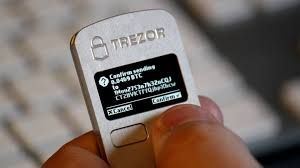
To verify ownership of bitcoins associated with an address, one must confirm possession of the cryptographic private keys that control that address. Many hardware wallets make this process easy by allowing address verification directly on the device.
When a hardware wallet is connected to a computer and the address confirmation process is initiated, the computer software sends address information to the external device. The device internally uses the private keys to verify that the address was indeed derived from one of those keys. The hardware wallet then displays the address on its own screen, allowing the user to confirm that it matches what is shown on the computer. If it does, it confirms that the private keys were involved in generating that address.
However, when using only the computer software to verify addresses, without confirming directly on the hardware wallet, there is a possibility — albeit small — that the software or the wallet itself has been compromised, and that the displayed address actually belongs to an attacker. Any funds sent to such an address would be lost forever. Therefore, confirming addresses on the hardware wallet screen is essential to prevent this type of attack.
Proving Key Control by Spending Bitcoin
Another way to prove control over funds associated with a Bitcoin address is by spending a small amount of bitcoin from that address. This method proves that the person in question is capable of transferring bitcoin from that address, serving as a form of self-verification or demonstration to a third party that they control the funds.
For example, if it’s necessary to demonstrate control of an address, one can send a small amount to a specific destination. Once broadcast, all parties can observe the transaction through their own node or a blockchain explorer.
However, this method has its downsides. First, it requires paying transaction fees and involves sending a small portion of bitcoin that is no longer under the owner’s control. Moreover, it publicly discloses additional information about the wallet to the entire Bitcoin network, potentially compromising the owner’s privacy. Although the security impact is minimal, this method can reveal more than desired.
Finally, even if unlikely, every Bitcoin transaction introduces potential for error, which can lead to irreversible losses. For these reasons, spending bitcoin to prove control over an address is far from ideal.
Proving Control by Signing a Message
A more elegant and secure way to prove ownership and control is by signing a message using the private keys. This method is similar to signing a transaction but does not involve broadcasting any information to the Bitcoin network or transferring funds.
Instead, the private keys are used together with the locking script of the relevant address to sign a message. This cryptographically demonstrates control of the private keys associated with that address, without the need to spend any bitcoin. It is the ideal way to prove Bitcoin ownership and control — free of charge and privacy-preserving.
This feature is available in several wallet applications, such as Trezor Suite and Sparrow Wallet. The process involves selecting an address to verify, providing a message to sign, and following the instructions on the hardware wallet. The resulting signature is a long string of letters and numbers.
Anyone who knows the address, the message, and the signature can use any software that supports BIP 137 to verify that the signature originated from the same private key that controls the address. These signatures are generally accepted as sufficient proof of control over a given Bitcoin address.
The Limits of Cryptographic Proofs
Although cryptographic signatures are powerful, they are not absolute proof of Bitcoin ownership. There are two main reasons for this:
- Signatures do not identify the person who performed the signing. The signature only proves that the holder of the private key authorized it, not who that holder is.
- Signatures are momentary proofs. A signature only proves access to the private key at the moment it was made. The keys may have been lost or destroyed immediately afterward, and there is no way to prove otherwise except by performing a new signature later.
Because of this, several institutions that regularly issue Bitcoin proof-of-reserves perform signatures periodically to demonstrate ongoing control over their funds.
Conclusion
Knowing how to verify Bitcoin ownership is essential for anyone holding Bitcoin in self-custody. It is also an important practice for companies or institutions holding Bitcoin on behalf of others. By learning how Bitcoin nodes and blockchain explorers work — and by becoming familiar with hardware wallets — one can independently, securely, and privately verify Bitcoin ownership.