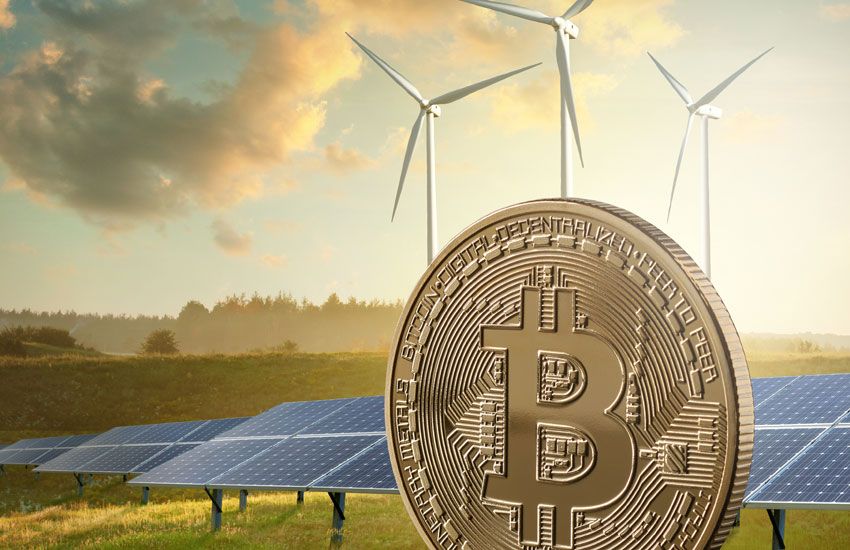
Mining, Proof-of-Work and the Expansion of Renewable Energy
The Debate on Bitcoin’s Energy Consumption
Bitcoin’s energy consumption has been at the center of environmental debates for years. The Proof-of-Work consensus mechanism, which secures the Bitcoin network by requiring miners to perform computationally intensive tasks, is often criticized for consuming large amounts of electricity and, in doing so, contributing to greenhouse gas emissions.
Indeed, headlines in several newspapers and media outlets have at times described Bitcoin as an unsustainable technology, often comparing the amount of energy used by the Bitcoin network to that consumed by entire countries. This has led many governments around the world to respond with restrictive and hostile regulations toward mining activity.
However, this perspective is incomplete and overly simplistic. When we closely examine Bitcoin’s energy dynamics, it becomes clear that there is far more nuance — and that, when applied correctly and under certain conditions, Bitcoin mining can serve as a catalyst for renewable energy expansion, grid stabilization, and decarbonization.
Bitcoin Mining and the Energy Transition
At the core of this debate lies the relationship between Bitcoin mining and the global energy transition underway in many countries. Around the world, nations are striving to meet ambitious climate goals, including limiting global temperature rise to 1.5°C, as specified by the Intergovernmental Panel on Climate Change (IPCC).
Renewable energy sources such as solar, wind, and geothermal play a fundamental role in this transition. However, their integration into existing electrical grids faces persistent challenges — the biggest being intermittency and variability. In other words, solar and wind energy production often peaks when demand is low, creating imbalances between supply and consumption. When grids are unable to store or transmit this excess energy, the surplus renewable energy generated is wasted and goes unused.
To make matters worse, many renewable energy production sites are located in remote areas, far from urban centers, making electricity transmission expensive and inefficient. Ultimately, this delays the return on investment for building these renewable energy facilities. These structural obstacles slow down the adoption of renewable energy sources and hinder global decarbonization efforts.
Mining Flexibility and Integration with Renewable Energy
The Bitcoin mining process is well-positioned to address many of these challenges. Unlike most industrial activities, Bitcoin mining can act as a flexible load resource within energy systems because its operations are highly adaptable. Mining centers can be turned on or off within seconds without causing disruptions to the industry or damage to the equipment. This flexibility allows miners to consume excess energy produced by the grid during periods of surplus or completely shut down operations during peak consumption periods.
Moreover, since Bitcoin mining does not need to be tied to a specific location, mining operations can be established directly at renewable energy production sites to utilize electricity that would otherwise go to waste. In this way, Bitcoin miners act as buyers of last resort, monetizing surplus energy that has no other market.
This has transformative implications for renewable energy development. In many regions, solar and wind installations produce far more energy than the grid can consume during off-peak periods, forcing producers to curtail output and lose revenue. By colocating Bitcoin mining at these sites, producers gain an additional source of income by selling excess energy to Bitcoin miners. This increases the profitability and viability of renewable projects, encouraging more capital investment in this sector. Over time, this could create a positive feedback loop: more renewable infrastructure would attract more miners seeking cheap energy, which in turn would boost renewable competitiveness and accelerate the transition to clean energy.
New Environmental Applications and Business Models
Beyond grid integration, Bitcoin mining also offers solutions for methane mitigation — a critical factor in climate change. Methane is 80 times more potent than carbon dioxide in terms of its warming potential. A significant amount of methane from oil fields and landfills is released into the atmosphere through inefficient venting or flaring. Mobile Bitcoin mining units can be deployed to these sites to convert the gas into electricity, which is then used for Bitcoin mining.
In the United States, this model is gaining increasing recognition, with several projects demonstrating major reductions in methane emissions. In fact, the volume of natural gas currently flared exceeds the total energy demand of the Bitcoin network, meaning that integrating mining into these operations could completely offset Bitcoin’s carbon footprint while helping reduce harmful emissions.
Bitcoin mining can also be integrated with other energy sources beyond renewables. For example, nuclear power plants produce a constant output regardless of fluctuations in demand, often resulting in surplus generation during low-demand periods. By colocating Bitcoin miners at nuclear plants, operators can monetize this excess capacity without compromising the energy available for other consumers.
The same applies to hydroelectric dams in regions with seasonal surpluses. Partnerships with miners can absorb excess unused power, helping stabilize local markets. In all these examples, Bitcoin mining acts as a controllable, location-independent load that improves energy efficiency and supports diverse electricity generation systems.
Indeed, emerging business models are already demonstrating the economic potential of combining Bitcoin mining with renewable energy. Miners colocate directly at generation sites, bypassing transmission constraints. Power purchase agreements between renewable operators and Bitcoin miners create predictable revenue streams and may include flexible terms requiring miners to reduce energy use during peak hours. In some cases, energy companies are vertically integrating Bitcoin mining into their operations to increase profits — both from electricity production and digital asset generation.
Another growing model involves mining with electricity generated from flared gas, simultaneously generating revenue and reducing environmental harm. These business models highlight the growing symbiosis between Bitcoin mining and renewable energy providers, where both parties benefit economically while advancing their sustainability goals.
Implications and Challenges
The environmental implications of these developments are significant. Bitcoin mining can drive the growth of decarbonized electricity through two mutually reinforcing mechanisms. First, the revenue effect increases as miners purchase excess renewable energy, improving economic projections and encouraging additional capacity development.
Second, as miners naturally seek cheap and clean electricity sources, they displace and marginalize more polluting, non-renewable alternatives. Together, these dynamics position Bitcoin uniquely to promote renewable energy expansion and grid decarbonization.
However, these benefits do not materialize instantly. Several challenges must be overcome to fully realize this potential. Regulatory uncertainty remains a major issue, and inconsistent policies add investment risk — pushing the mining industry toward jurisdictions that rely on fossil fuels for power generation.
Public perception also presents a major obstacle, as mainstream narratives surrounding Bitcoin mining are largely negative — especially when funded and influenced by those with competing interests. One example occurred in 2022, when Chris Larson paid $5 million to Greenpeace to spread misinformation about Bitcoin’s environmental impact in an effort to pressure the network to change its consensus mechanism from Proof-of-Work to Proof-of-Stake.
Additionally, the Bitcoin mining industry competes with other flexible load solutions that also seek to absorb excess renewable energy, such as battery storage and green hydrogen production. Integrating Bitcoin mining will require laws and regulations that incentivize renewable-based mining while discouraging fossil-fuel-powered operations.
Final Perspective
Viewed through this lens, Bitcoin’s environmental impact depends less on how much energy the network consumes and more on how that energy is used and where it is sourced. When miners rely on fossil fuels, emissions can increase significantly. But when Bitcoin mining is integrated with renewable energy, it can make projects more profitable, reduce wasted electricity, stabilize the grid, and accelerate clean energy adoption. Unlike government subsidies and mandates, Bitcoin introduces market-based incentives for renewable energy adoption, aligning financial motivations with climate goals.
Rather than seeing Bitcoin as an environmental threat, this perspective adopts a balanced view that helps us understand the role Bitcoin can play in the energy transition. Bitcoin has unique qualities — including its interruptibility, portability, scalability, and sensitivity to electricity prices — that make it an ideal intermittent complement to renewable power generation and a strengthener of the modern electrical grid. With the right business models and forward-thinking policies, Bitcoin can become part of the solution to the environmental challenge — transforming how energy is produced, consumed, and monetized in a constantly changing world.