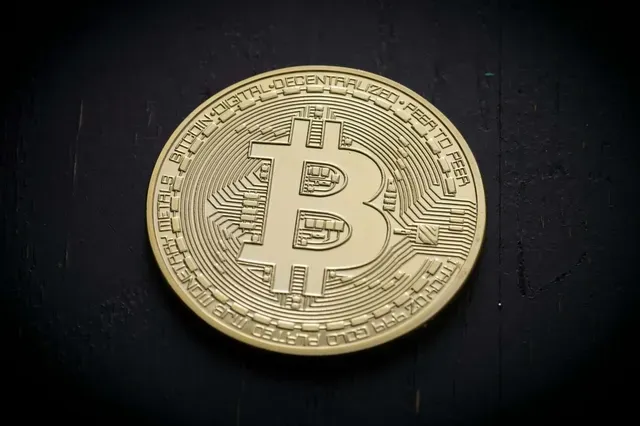
How does Bitcoin work?
Bitcoin is the oldest and most valuable cryptocurrency among the thousands of alternatives that exist today. Bitcoin remains unique and unmatched due to its founding principles and culture of decentralization—qualities that no other project has been able to replicate.
Unlike the traditional payment system, the Bitcoin network offers final settlement without intermediaries, where Bitcoin transactions are, in fact, irreversible. There is no bank or entity capable of altering the ledger unilaterally. Once a transaction is confirmed on the blockchain, it becomes part of a permanent and immutable record.
Thus, the Bitcoin network operates through three different types of participants: users, nodes, and miners. Users are individuals or entities that send and receive Bitcoin. Nodes, on the other hand, are computers running the Bitcoin software, validating transactions and ensuring that the protocol rules are followed. Essentially, nodes act as referees capable of rejecting invalid transactions and maintaining the integrity of the blockchain ledger.
Finally, miners are specialized computers that compete to create new blocks of valid transactions. Approximately every 10 minutes, a miner produces a new block and is rewarded for their work with transaction fees and the block subsidy of newly issued bitcoins, distributed according to the rules of the protocol.
Transactions on the Bitcoin network compete for limited space within each block, which creates a transaction fee market. Larger or more complex transactions, which require processing more data, result in higher fees. Therefore, during periods of higher network activity, users compete by paying higher fees to have their transactions included as quickly as possible in the next available blocks.
Because of this design, the Bitcoin network’s transaction throughput is lower than that of traditional payment systems. For example, Visa processes over 1,000 transactions per second—far exceeding Bitcoin’s capacity. However, Visa network transactions do not include final settlement. They rely on commercial banks and central banks, and throughout that process, transactions can be reversed. In contrast, the Bitcoin network enables final settlement at the protocol level.
To increase transaction speed and reduce costs, solutions have been developed to operate on additional layers above the Bitcoin base protocol, such as the Lightning Network. This technology allows Bitcoin users to send and receive bitcoins instantly at a fraction of the main network’s cost, while maintaining the same security and immutability guarantees of the blockchain. Thus, the Lightning Network provides scalability for everyday payments.
To use the Bitcoin network, an individual or entity must first acquire Bitcoin. This can be done by getting paid in bitcoin, receiving bitcoin from another user, exchanging fiat currency for bitcoin, or even mining it. Once in possession of Bitcoin, a user can send bitcoins to others. Over time, Bitcoin has evolved into a self-sustaining monetary system in which software automates monetary policy, the network ensures final settlement, and other layers such as the Lightning Network enable faster and cheaper transactions.
Therefore, Bitcoin is not just a currency—it is a decentralized monetary infrastructure designed to operate without intermediaries or supervisors. Moreover, unlike fiat currencies such as the Euro—where the European Central Bank unilaterally adjusts the money supply in the economy—Bitcoin follows an automated issuance schedule for new tokens.
The Bitcoin network’s fixed monetary policy guarantees that there will never be more than 21 million bitcoins in circulation, a limit expected to be reached by the year 2140. Every four years, the mining subsidy awarded for finding a new block is cut in half, reducing the rate of new supply issuance.
Anyone can download Bitcoin’s code from the internet and run the software. All the code is open source and can be inspected by anyone, creating a monetary network with transparent, predictable, and tamper-resistant rules.
Thus, Bitcoin’s design aligns incentives to encourage honest behavior from all network participants. Nodes reject invalid transactions—such as attempts to spend the same funds more than once—and reject blocks where miners award themselves more bitcoins than the protocol allows.
When someone sends Bitcoin to another person, the transaction is verified by a network of miners. These miners use their computers to generate hashes (fixed-length strings of characters) through a trial-and-error process, attempting to produce a hash that meets or exceeds the network’s required difficulty level. This process is designed to require miners to expend time, energy, and resources to propose valid blocks of transactions.
This method of achieving consensus among network participants without a central authority is known as a consensus mechanism. The Bitcoin network’s consensus mechanism is called Proof-of-Work. Miners who successfully generate winning hashes earn the right to add their proposed block to the blockchain. Once the network verifies the proposed block, it is permanently added to Bitcoin’s blockchain, and no one can alter it.
Theoretically, a malicious actor attempting to attack the network could try to rewrite the Bitcoin transaction history and create an alternative blockchain to erase certain valid transactions and insert fraudulent ones. However, succeeding in such an attack would require enormous amounts of energy and computational power.
To outpace the rest of the network, an attacker would need to remine all the blocks following the fraudulent change and continue producing new blocks faster than all honest miners combined. The energy costs associated with such an attack are astronomical and impractical—ultimately incentivizing miners to act honestly and cooperate to maintain the network’s security.
As Bitcoin continues to grow, a financial infrastructure is emerging in which software enforces the rules and the network guarantees blockchain security. Thus, Bitcoin represents not merely an alternative to the current financial system but a complete paradigm shift. It is the first monetary network in history that is truly decentralized, secure, transparent, and open to the entire world.