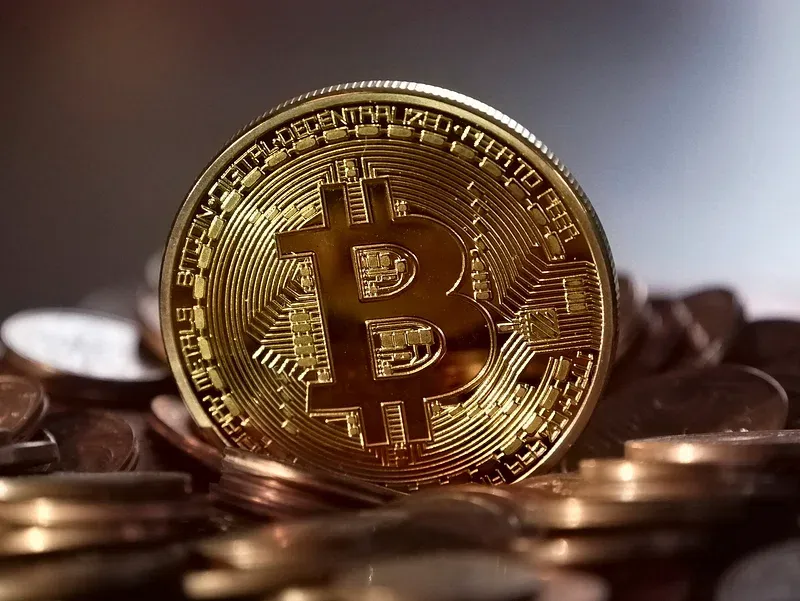
Bitcoin's Value Proposition
Bitcoin is a disruptive technology without parallel. To understand its importance, it is necessary to understand how the world works — and how it would be without this technology. The greatest mistake of its critics is to dismiss Bitcoin as an unnecessary invention — a solution looking for a problem — that benefits early investors at the expense of those who enter later.
Even Nobel Prize–winning economists, like Paul Krugman, fail to understand why Bitcoin exists and why it is so necessary in today’s world. Without a doubt, this happens because they don’t understand how the world works outside stable and wealthy nations. For reference, this was the same economist who in 2005 doubted the impact of the Internet on the global economy.
Bitcoin as a Solution to Real Problems
In fact, people adopt Bitcoin not because it is just another technological trend, but because this revolutionary technology helps them solve their daily problems. In emerging countries, citizens — trapped by defective money that loses purchasing power year after year — use Bitcoin to preserve their savings, conduct commerce, and send money from abroad to their families.
Undoubtedly, there are millions of people around the world depending on the Bitcoin network. According to World Bank data, about 31% of adults globally do not have access to a traditional bank account, as access to banking services is restricted or unavailable. Yet anyone with an Internet-connected device can access the Bitcoin network freely and without needing permission.
Inflation and Preservation of Value
For more than a billion people, inflation is a crisis and a daily struggle — not just an abstract concept. In countries like Venezuela or Lebanon, national currencies lose enormous amounts of purchasing power (on average 20% per year), which drives citizens to seek alternatives to the traditional financial and monetary system in order to preserve what little purchasing power they have left.
In these conditions, an absolutely scarce — and mathematically guaranteed — asset like Bitcoin (there will never exist more than 21 million bitcoins) may be volatile, but it is still vastly superior to decaying fiat currencies. Over the years, Bitcoin has outperformed all fiat currencies in the world. Thanks to its ease of use, verifiability, and portability, Bitcoin is far more practical to use than gold, for example. And unlike gold, Bitcoin can be transferred instantly and easily hidden or stored without risk.
Inefficiency of the Traditional Financial System
On the other hand, the traditional payment system is full of intermediaries. A simple purchase made with a bank card involves multiple entities that charge fees for the services they provide — from authentication to verification and fraud detection. End consumers, on average, end up paying around 1.5%–3% in fees and commissions, and the final settlement of the transaction can take several days.
Bitcoin and the Lightning Network are capable of overcoming these inefficiencies. On the Lightning Network, payments are virtually free, instantaneous, and function globally. Moreover, the technological infrastructure is the same whether you’re paying for a coffee at Starbucks or sending money to a relative in Mozambique. Therefore, Bitcoin is not just a small improvement over the current financial infrastructure — it’s a massive leap in both cost and speed.
A Refuge from Repression and Conflict
Bitcoin also stands out in contexts of governmental repression and conflict. When it becomes necessary to flee a totalitarian regime — as a journalist, activist, or member of a minority group — traditional assets fall short. Bank accounts can be frozen. Cash takes up space and can be stolen. Gold is heavy and can easily be detected at airports, for example.
Bitcoin, however, has no mass. With just a memorized seed phrase, it is possible to transport millions of dollars across borders without being stopped at a single checkpoint.
In a letter to the U.S. Congress, several human rights activists from different countries defended the role of Bitcoin as a form of resistance against authoritarian regimes. In fact, in countries like Nigeria or Belarus, Bitcoin has kept civil society alive. For example, in the first weeks of the war between Russia and Ukraine, Bitcoin helped many Ukrainian families when the traditional financial system ceased to function and remained inoperative for several days.
Limited Supply and Global Demand
Thus, Bitcoin is not a solution looking for a problem, but rather the solution to many urgent problems. Challenges like the ones mentioned above create real demand for Bitcoin, and the absolutely limited supply of 21 million bitcoins means that there is only one release valve when demand increases: price.
The market in which Bitcoin will continue to thrive is truly global, driven by the desire for neutral money that transcends censorship, borders, and governments — even if this escapes the understanding of certain privileged elites in financially stable economies.
The Separation Between State and Money
Indeed, Bitcoin is the most secure, credible, and valuable neutral digital asset. Its value rests on the separation between the State and the creation of money, and on removing the State’s unilateral power to dictate monetary policy and police banking activity.
Bitcoin offers freedom from capital controls and financial surveillance, enabling any two entities or individuals in the world to transact at any time, on any day, without needing authorization or approval.
Bitcoin as a Lifeboat
We can therefore conclude that Bitcoin is not a speculative fad token, but a lifeboat for many individuals, families, and businesses around the world who are in need of honest money.
Bitcoin protects against inflation, reduces friction and fees in payments, empowers those without access to basic banking services, and extends a hand to those seeking to flee authoritarian regimes. By combining scarcity, neutrality, and security, Bitcoin represents a monetary network and disruptive technology unlike anything the world has ever seen before.