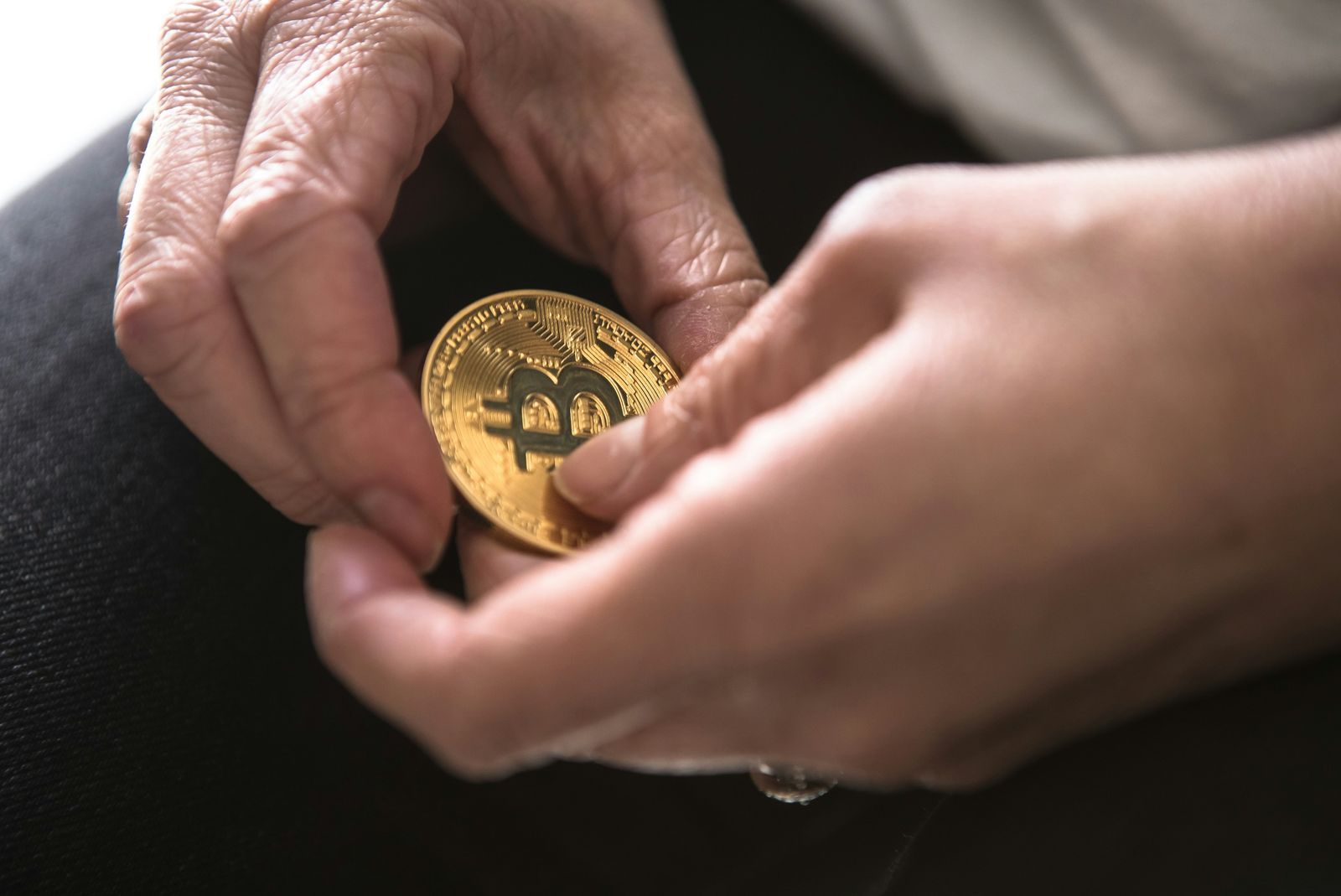
Bitcoin is a Beacon of Freedom
Bitcoin is not just a new form of money. It is a disruptive technology that promotes individual freedom — a technology that grants every user freedom of speech, the right to private property, and access to a global monetary network beyond the influence and control of governments, banks, and large corporations. On the Bitcoin network, transactions cannot be stopped; they are validated and included in the blockchain through global competition rather than controlled by a central authority.
Unlike any other asset in history, access to Bitcoin can be hidden or memorized, making it the most censorship- and confiscation-resistant technology ever created in human history. The protocol does not discriminate and operates 24 hours a day, 7 days a week, regardless of nationality, gender, or creed. Across the world, Bitcoin has already proven to be a tool for human rights protection, a parallel financial system, and a lifeboat for millions trapped in failed economies and oppressive regimes.
The implications of this are profound. In Nigeria — a country with more than 200 million people, rampant inflation, and a broken financial system — millions are turning to Bitcoin. In 2020, when thousands of young Nigerians organized protests against the country’s special police forces, the government suspended access to banking platforms used for fundraising. Yet Bitcoin endured, allowing protesters to raise thousands of dollars to obtain equipment and keep the movement alive.
In Hong Kong, as the Chinese Communist Party sought to extinguish democracy, members of the resistance faced exile, imprisonment, and the confiscation of their financial assets. Once again, Bitcoin became a ray of hope as activists converted their local currency into Bitcoin to prevent confiscation. Moreover, Bitcoin ATMs — which do not require any form of identification — allowed funds to be sent and converted into local currency to support journalists and opposition politicians who had been excluded from the traditional banking system.
In Iran, where Western sanctions have excluded thousands of citizens from the global trade network and the dictatorial government continuously resorts to money printing, exponential inflation of 20–40% per year has destroyed family savings. As a result, people both inside and outside the country have turned to Bitcoin as a parallel financial system — one that cannot be inflated — to send and receive money for their loved ones. And in Zimbabwe, where people still suffer from the legacy of Robert Mugabe, inflation, capital controls, and financial exclusion persist. A growing number of citizens have adopted Bitcoin as an escape from a financial system that fails them and keeps them in poverty.
In Venezuela, citizens have also endured the destruction of their economy under the leadership of Hugo Chávez and Nicolás Maduro, who promised prosperity but left behind one of the largest refugee crises in the world. Despite Venezuela’s vast oil wealth, the country has suffered one of the worst hyperinflation events in history. Millions have fled, but some took their savings in the form of Bitcoin, which began seeing widespread adoption in 2015 and now serves as a financial refuge for thousands. Similarly, in Belarus, where Aleksandr Lukashenko’s regime froze bank accounts and conducted financial surveillance operations during the 2020 protests, Bitcoin played a crucial role in keeping the protests alive, allowing people to exchange bitcoins for rubles to meet daily needs or save for the future.
Russia’s invasion of Ukraine also revealed another side of Bitcoin: money for refugees. With more than six million Ukrainians displaced — and Russians also fleeing their own government — traditional banking systems failed and fell short. However, Bitcoin continued to function wherever there was an internet connection, allowing people to send money across borders and help family and friends during the first chaotic days of the war when the fiat system was paralyzed.
In African countries such as Togo and Senegal, bound to the CFA franc — a colonial currency whose value has fallen by 99% over the past 75 years — people have found hope in Bitcoin. For tens of millions of people in this region, many of whom live under dictatorships, Bitcoin represents a form of peaceful protest — a means to build financial resistance outside a system that keeps them impoverished and to reclaim their individual sovereignty.
Even in so-called stable democracies, Bitcoin has served as a form of protest money. In 2010, when WikiLeaks exposed U.S. military documents, several governments pressured PayPal, Amazon, MasterCard, and Visa to isolate Julian Assange and his organization. Satoshi Nakamoto himself warned WikiLeaks not to use Bitcoin, fearing that too much attention could harm adoption and sink the project. Nevertheless, WikiLeaks embraced Bitcoin and was able to receive funding in a way that could not be stopped or censored by any authority.
More than a decade later, in February 2022, the Canadian government demonstrated how fragile financial freedom can be even in a democracy when it decided to freeze the bank accounts of truckers protesting government mandates, accusing them of terrorism. Yet even in this situation, Bitcoin persisted, and a significant portion of the donations reached the truckers directly, peer-to-peer, after they had been banned from the banking system.
Across all these stories, the central theme remains the same: while governments freeze bank accounts, Bitcoin resists; while inflation destroys wealth, Bitcoin preserves it; while borders separate families, Bitcoin reunites them; while colonialism and dictatorships strip individuals of sovereignty, Bitcoin restores it. Over the past years and in the hardest circumstances, Bitcoin has proven to be a technology that upholds human rights, supports resistance, and preserves human dignity. It is protest money — a tool for the oppressed and a beacon of hope for a freer future.